GRATITUDE
By Mariam Jibril
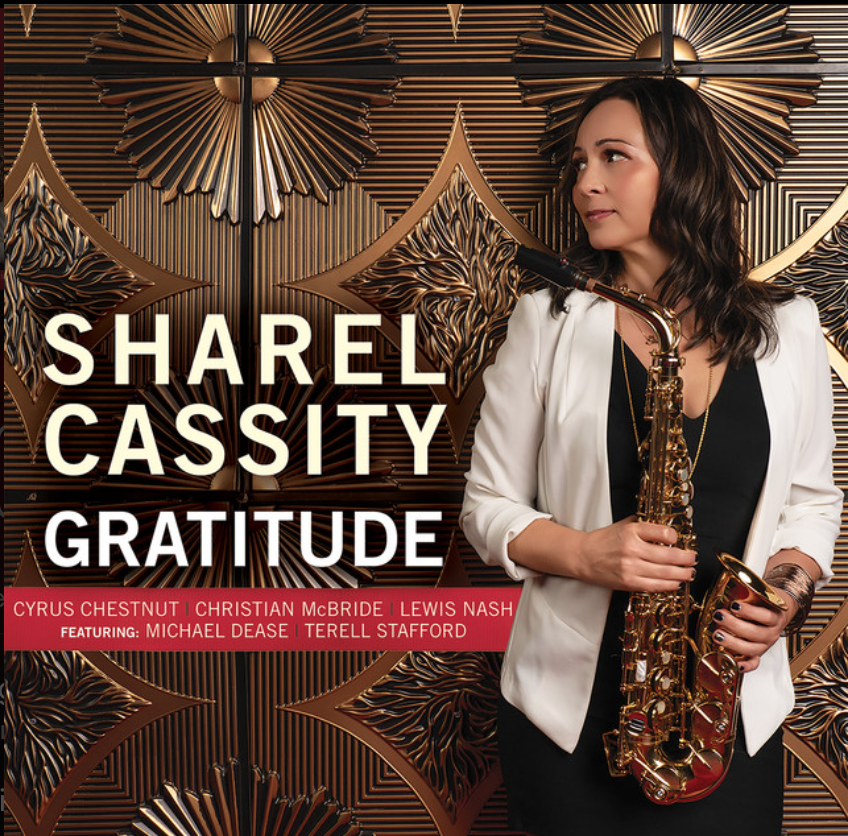
Sharel Cassity’s Gratitude is an ideal example of how a jazz recording can successfully convey the intended message and feeling, without the need to ramble. Cassity is accompanied by a veteran Chicago saxophone player and a stellar supporting cast consisting of Cyrus Chestnut on piano, Christian McBride on bass, Lewis Nash on drums, Michael Dease on trombone, and Terell Stafford on trumpet. The track adds yet another level of reflection, warmth, and appreciation to the extent of the enthusiasm communicated. Although it is the title song of Cassity’s fifth album as a band leader, Gratitude is more personally thought-provoking and carries more sentimental value as it personifies an artist balancing performance, education, family, and self-growth for the past 20 years. Rather than focusing on gratitude as a theme, Cassity has crafted the spirit of gratitude into a conceptual musical construction where every note carries the sentiment of emotional fulfillment.
Gratitude embraces the elegance of a slow musical waltz. The playful rhythmic backdrop of the waltz is used to give form and structure to the song, while the relaxed tempo allows Cassity to express herself with her deep sense of musical flow. The handling and communication of the musical messages are at a very high level and catch the modern listener regardless of his/her familiarity with contemporary jazz. Chestnut’s piano is a very important addition, and so is McBride’s bass, which adds warmth and continually drives the song. Nash’s understated drumming is a very important support to the song as it adds color and texture, but most importantly never takes center stage musically. The combined effort of the supporting combo adds considerable depth and breadth to the song.
Cassity’s ability to manipulate the alto saxophone to sound similar to the human voice is perhaps the most compelling aspect of this track. Cassity is devoid of actual lyrics, but the song is able to express appreciation, peace, optimism, and a subdued victory with ease. Cassity’s phrasing differentiates the melody and lends a lot of personality. The instruments in the background mirror Cassity’s instructions, and the trombone and trumpet fill the background with the harmony and depth Cassity requires. Cassity, Dease, and Stafford all interpret the score creatively and provide something musically arranged, yet emotionally free.
Gratitude shows the breadth of Cassity’s career as well. The connection Cassity has now with musicians that influenced her career was brought on by the influential recording of Christian McBride, Gettin’ To It. This new recording is a continuation of the old recording, but Cassity is in no way looking back. This recording seems to be Cassity’s way of looking to the future while still acknowledging the people, the relationships, the experiences, and the opportunities that helped her. The balance between the feelings of being reflective and the feeling of celebration is struck well.
Set against a backdrop of music that accentuates emotional soundscapes with heavily layered production and/or lyrical passages that are emphasized, Gratitude is a breath of fresh air. The song demonstrates the ability to sound elegant while using ornate composition and the musical and emotional leadership of Cassity’s alto to lead the group, creating a sense of intimacy along with a stellar ensemble. There is a perfect blend of strong rhythmic lines and use of space, and the ability to create a sense of urgency and the desire to slow and meditate, inclusive of Cassity’s waltz setting. For audiences, whether jazz devoted or those new to the genre, this piece also provides a wonderful example of Cassity’s growth as a composer and arranger.
Gratitude is able to capture and express a multitude of things and feelings, and it is indeed very deserving of its name. Sharel Cassity really has created and recorded something amazing and beautiful. It truly is sophisticated and warm and filled with beautiful melodies, and it is expressive and human in nature and captures the feeling of one’s appreciation for how far one has come and for the things and people that inspired the journey. Jazz has the ability to express so many deep feelings and to tell a story, and Gratitude is a wonderful example to show that dance is indeed still art. It really is a masterpiece, and it provides a lot to draw the listener in and focus on something truly moving.