GO BANG! (#5)
By Mariam Jibril
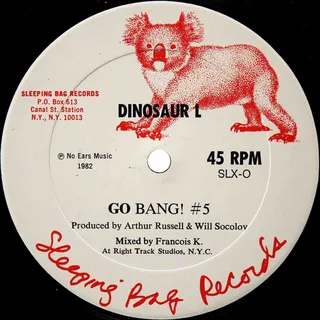
Tracks that welcome experimentation are rare. Dinosaur L’s Go Bang! (#5) is one of those tracks. Dinosaur L is the resting place for Arthur Russell’s disco-leaning tracks. Rather than constrain himself to the rules of traditional songwriting, Russell utilizes the track to engender an environment of his own creation. After the release of Russell’s 1981 album 24→24 Music, Go Bang! (#5) was released as a standalone single. This track documents the heart of Russell’s work. He had a penchant for seeing what the world would look like if musical genres that should not be near one another were placed in the same room together. The track is a bizarre, sensual, living example of avant-disco that, when played today, would still surprise the crowd and get them dancing.
The philosophy of the track is obvious when you listen to the production. A consistent, tidy verse-chorus structure is not the goal here. The track is more like a building, each part of the structure shifting, then joining together. A steady, consistent groove is the goal, and Russell accomplishes this, but there is a constant interplay between the guitars, drums, bass, percussion, and keyboards. The psychedelic, cosmic organ creates a layer and weight to the track. This track has music imbued with a positive goal of wanderlust, with a focus on groove, and has an equilibrium of discipline and chaos. This is music that rewards dancing, but also listening.
Go Bang! (#5) is also unconventional instrumentally. Russell uses the vocals as another layer in his musical textures, and the performers sing in a playful and unpolished way. Jill Kroesen’s vocals have a very personal charm, and an almost theatrical and uncertain kind of delivery. The other vocalists and Russell keep interrupting and making this song communal (bringing the opposite vibe to a pop song) rather than polished. The main emotion of the song is the desire to see “all my friends at once.” This song is then expressing Russell's wish to have a big, fun collective release. There is a depth to the song beyond the surface, and that is the desire to connect and have fun, which is in the balanced use of art, social engagement, and sexuality. Russell implied that the dance floor is a place to have fun and connect with people. Go Bang! (#5) is accessible musically, but unpredictable. The composition is pretty free. The groove is accessible, even while maintaining the song’s unpredictable nature. When Go Bang! (#5) was remixed by Kevorkian, the dance floor focus was more defined, while the song's essence was still fun and psychedelic. His remix brought out the multitude of ideas hidden in Russell’s original.
Even after all of these years, Go Bang! (#5) is special because it never stuck to its time. Though traces of it can be heard across Disco, House, Techno, and other experimental forms of dance music, it's a difficult track to place. It mixes Funk and experimentation in a way that is musically friendly and almost warm, and is oddly accessible. Something about hearing a well-known musical dance vocabulary being pulled apart and reconstituted excites me. Especially because this track never feels finished, much like Russell's vision, and in fact, feels like it is growing and evolving. If you stop to listen, you will see that it is.
For your first exposure to Dinosaur L, listeners of JamJournal, Go Bang! (#5) exemplifies that the best dance music isn't restricted to being either fun and imaginative or dull. It can be both. Russell found a way for avant-garde dance music to be experimental but also sweaty, and to incorporate musical uncertainty, which he skillfully transformed into peace and joy for the dancer. It houses strange vocals and music, a heavy rhythm, psychedelic textures, and an odd structure that truly are fun and impossible to replicate. Go Bang! (#5) is so much more than just an interesting fact of the history of dance music. It is an invitation to Nikita (whoever that may be) to dance to the infinite possibilities of sound, and it should be heard at full volume.