GOOD FRIEND
By Mariam Jibril
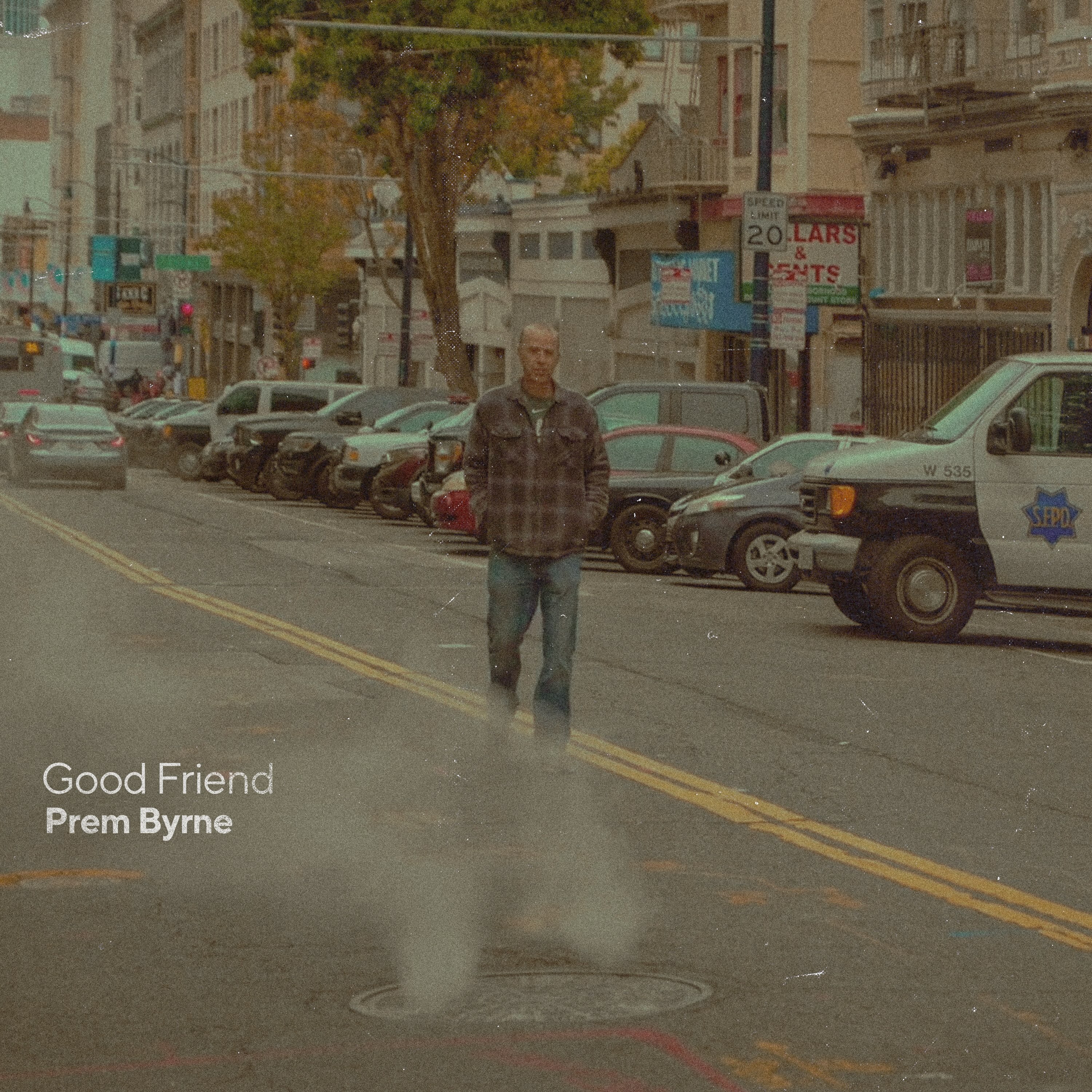
There is something deeply moving about a song that encourages us to become the kind of friend we so often try to be for everyone else. On his latest single, Good Friend, released October 21, 2026, independent singer-songwriter Prem Byrne turns that simple but powerful idea into an intimate musical reflection on self-acceptance, forgiveness, and the complicated relationship we have with ourselves. Hailing from Marin County, California, Byrne has developed a songwriting approach rooted in personal experiences, emotional honesty, and an appreciation for the human condition. Rather than delivering another conventional song about friendship or romantic connection, he takes a more introspective direction, exploring what it means to look in the mirror and finally make peace with the person looking back. There is a sense of lived experience behind the record, particularly in Byrne’s admission that the message took 57 years of life to fully understand and express. That maturity gives Good Friend an authenticity that feels earned rather than manufactured, allowing its central message to connect beyond the boundaries of the artist’s own story.
Good Friend finds a comfortable space between acoustic folk, indie pop, and soft rock, bringing together warmth, melodic accessibility, and subtle instrumental depth. Featuring Byrne on guitar and lead vocals, the arrangement maintains an intimate foundation while gradually introducing textures that give the song a fuller emotional character. Gentle acoustic guitar work provides much of its organic appeal, while piano and sweeping violin passages add a reflective quality that complements the subject matter. Co-produced with Adam Rossi, the production avoids becoming overly polished or unnecessarily elaborate, allowing the songwriting to remain at the center of the experience. One particularly interesting detail is the inclusion of Indian percussion, a subtle musical element that connects with Byrne’s childhood experiences growing up in the Himalayas. Combined with Avery Kadish’s soulful backing vocals, these touches give the track a distinctive character without distracting from its message. The result is an arrangement that feels both familiar and culturally textured, moving beyond a straightforward singer-songwriter presentation while preserving the intimacy that makes the song work.
At the heart of Good Friend is Byrne’s thoughtful exploration of self-judgment and the difficult process of forgiving the person we used to be. Through personal recollections, including moments when he tried to fit in by doing things that did not genuinely make him happy, he revisits the insecurities and youthful decisions that many people carry into adulthood. Instead of treating those memories as embarrassing mistakes that deserve endless criticism, he approaches them with compassion, recognizing that his younger self was simply searching for acceptance and trying to navigate life with limited understanding. The song's references to an internal river of judgment capture the exhausting experience of constantly questioning one's worth, while its central message challenges listeners to reconsider how they speak to themselves. Byrne makes an especially meaningful distinction between genuine friendship and the kind of internal criticism that becomes destructive whenever life does not go according to plan. His perspective suggests that being a good friend to yourself does not mean ignoring your shortcomings; it means acknowledging them without allowing them to define your entire identity. The idea of being alone without feeling lonely adds another thoughtful dimension, presenting self-acceptance as an opportunity to develop a more peaceful relationship with one's own company.
Byrne’s vocal performance is another important part of the song’s appeal. His soulful, expressive delivery carries a natural vulnerability that suits the reflective writing, giving the lyrics the feeling of a personal conversation rather than a rehearsed motivational statement. There is no need for excessive vocal dramatics because the emotion comes through in the sincerity of his interpretation and the understated confidence of someone who has spent considerable time understanding the words he is singing. His musical identity also becomes clearer when considered alongside his background. Growing up in poverty in India with his mother and younger sister exposed him to hardship, but also to extraordinary acts of kindness from people who often had very little themselves. Those experiences have influenced his recurring interest in resilience, empathy, justice, and the struggles of ordinary people. While Good Friend focuses more closely on the relationship with oneself, that underlying humanity remains present throughout. In a contemporary music landscape where conversations about confidence and self-love can sometimes feel packaged into predictable slogans, Byrne offers something more grounded. He acknowledges the uncomfortable memories, personal disappointments, and years of self-doubt that make self-acceptance difficult in the first place. This emotional honesty, supported by an arrangement that balances folk sensitivity with accessible pop appeal, gives the single a personality of its own.
Good Friend is a thoughtful and emotionally rewarding release that demonstrates how powerful songwriting can emerge from the simplest human realizations. Prem Byrne does not attempt to present himself as someone who has figured everything out; instead, he shares the perspective of someone who has spent decades learning to extend himself the same understanding and kindness he would offer another person. That honesty is what makes the track memorable. Its warm instrumentation, soulful vocals, culturally influenced details, and reflective lyrics come together to create a listening experience that feels comforting without becoming sentimental. Good Friend is particularly suited to listeners navigating personal growth, revisiting their past, or simply learning to be more comfortable with who they are. It is a reminder that the relationship we build with ourselves deserves just as much patience and attention as any other. For listeners looking beyond surface-level pop songwriting for music with genuine emotional substance, Prem Byrne’s latest single is certainly worth discovering. Sometimes, the most meaningful friendship begins with the person in the mirror.