THE GIRL, SO CONFUSING VERSION WITH LORDE
By By Celestine Brutus
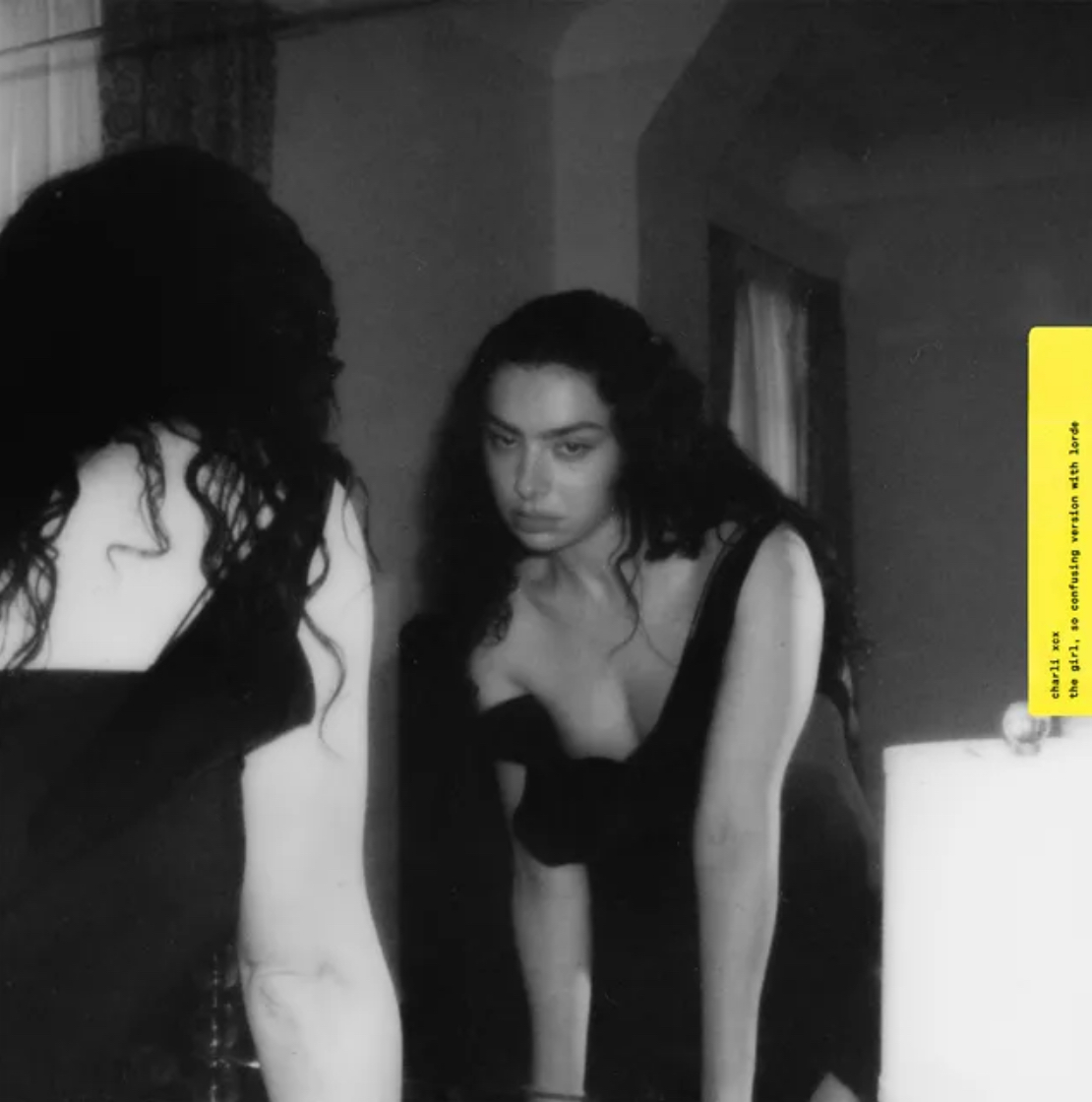
In “The Girl, So Confusing Version With Lorde,” Charli XCX and Lorde deliver what feels less like a remix and more like a reckoning of two pop auteurs meeting in the middle of a long-unspoken emotional minefield. The original track, taken from Charli’s BRAT album, already bristled with complexity. With its fractured beats and raw lyrics, “Girl, so confusing” hinted at envy, admiration, alienation, and unresolved tension with a fellow woman in the industry. But now, with Lorde stepping into the song not just as a featured artist but as the other half of the story, the remix becomes something much deeper: a therapeutic, meta-pop confessional that breaks the fourth wall on pop stardom and feminine rivalry.
Charli’s original verses remain largely untouched, angular and self-aware, mapping out the unstable emotional terrain between two artists caught in comparison and contradiction. “Sometimes I think you might hate me / Sometimes I think I might hate you,” she sings with a lacerating honesty. The production remains skeletal and twitchy, full of digital friction, mirroring the emotional static of the lyrics. It’s a track that already felt like it was written in the Notes app during a long, sleepless night, and Lorde’s addition only amplifies that intimacy.
Lorde’s verse, which she texted in full to Charli (a moment Charli gleefully posted to Instagram with the caption “Fucking hell”,) is startling in its clarity and vulnerability. She slides into the song with a rhythm that recalls Nicki Minaj’s pointed cadence on “Come on a Cone” short, punchy bursts followed by languid drawls. Her voice is subtly digitized, coated in a fragile sheen, as she lays bare her insecurities, body image struggles, and the way fame distorts perception: “She believed my projection / Now I get it,” she admits in a devastating aside. In doing so, Lorde isn’t just responding to Charli’s confusion, she’s validating it and reciprocating it, adding layers of nuance to what could have remained a one-sided narrative.
What’s remarkable about the track is how it navigates the ethics of representation in art. As with any personal song that references real people, especially those within one’s professional circle, there’s an implicit tension: how do you write honestly without misrepresenting or exploiting? The late journalist Janet Malcolm once argued that writing about others is “morally indefensible,” a thesis that feels eerily relevant here. Charli and Lorde don’t dodge that discomfort; they face it head-on, turning the remix into a dialogue rather than a monologue. In doing so, they sidestep the pitfall of the “blind item diss track” and instead offer something more powerful: mutual recognition.
This remix isn’t just a pop event, it’s a rare act of public emotional processing between two artists often portrayed as archetypes rather than people. It’s deeply self-aware, slyly performative, but also weirdly tender. It captures something essential about the era of post-pandemic pop stardom, where authenticity is currency and therapy-speak permeates lyrics. In lesser hands, this might have felt like PR-savvy damage control orphan service. But Charli and Lorde pull it off with startling sincerity, creating a piece of music that’s both a brilliant remix and a mini-memoir of mutual confusion, admiration, and healing. “We’re two sides of the same coin,” Lorde raps near the end, and for once, in the topsy-turvy world of pop, it feels true.