WAITING ROOM
By By Celestine Brutus
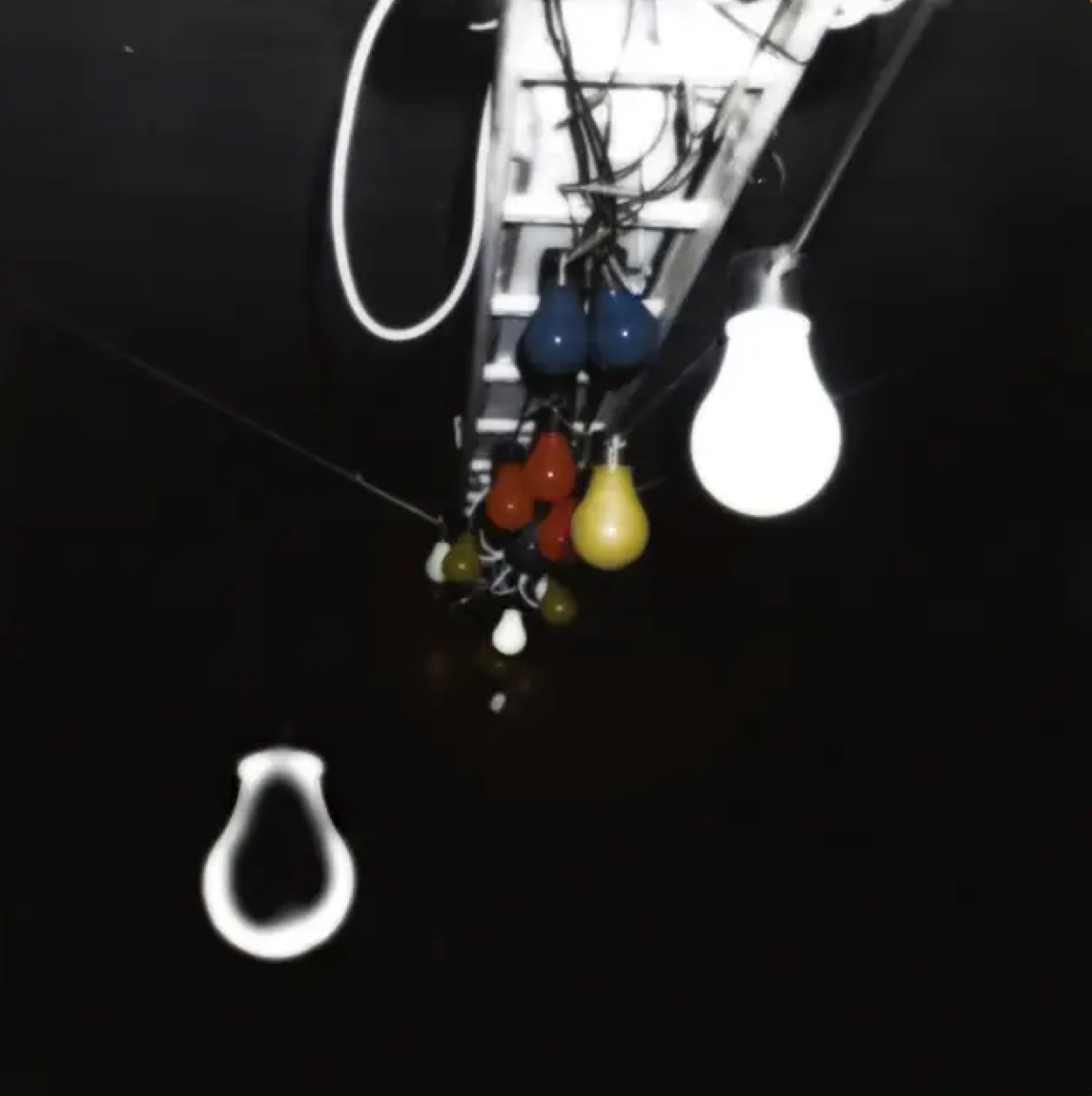
Kathryn Mohr’s full-length debut album “Waiting Room” captures a deep exploration of the uncanny, the painful, and the poetic. With roots in folk music, Mohr balances electronic experimentation and intimate yet expansive songwriting. While her melodies are beautiful, they are steeped in haunting vision. “Waiting Room” vividly recalls the songwriter's field recordings, capturing layers of both closeness and distance. Every aural texture is full of intention, an echo of life that is delicate and decaying yet not entirely forgotten. An abandoned fish factory in Iceland served as a creative residency for her field recording work, transforming it into a whirlwind of sound and silence.
Soft dread marks the listening experience of the album, starting from the first line, “This comfort is bad for your health.” “Driven,” the first single, puts forth whispery vocal techniques, instantly claiming the listener’s attention. While Mohr’s delivery may seem fragile, the mixture of heavy reverb, captivating field recordings, as well as rushes of wind breaks the boundaries of nature and amplifies her soundscape. Although the track is devoid of concrete lyrics, it stands as a profound archetype of her emotional expression for the entire album “Waiting Room” and what is to come. Mohr doesn’t yell for your attention; she earnestly pours out calm intensity, fog-like, leading you deeper into her world.
Tracks such as “Horizonless” and “Take It” capture both facets of Mohr’s talent: emotional storytelling and her knack for sculpting sound. On “Horizonless,” the sparse lyrics are stretched over an eerie drone that employs silence as a major ingredient. The line “You guessed it,” soft as a whisper, lingers like a breath in a nightmare. “Take It” features a more musically straightforward offering and showcases a confrontational side of Mohr. Over an almost melodic underpinning, she bittersweetly sings: “A knife for carving, not for caring, yeah, what a fairytale.” It’s this contrast of tender sound paired with brutal lyrical imagery that defines the tension throughout the record.
The gentleness of guitar lines blended with a lullaby-like vocal approach creates what seems like “Petrified,” the most deceptively sweet moment. Comforting at first, the subject matter of physical decay and creatures suffering changes that first impression. Mohr delights in blending horror with softness, inviting the listener to let their guard down, then swiftly delivering the emotional blow. The same can’t quite be said for “Wheel.” While rich in poetic imagery, “finding needles in the sandbox” feels flat in comparison. Following tracks before that pushed the bounds of syntactical density, the more loosely structured, meandering pace offers a respite from the gripping intensity.
Then there’s “Elevator,” potentially the most devastating moment on “Waiting Room.” Here, Mohr unleashes her maximum graphic storytelling over blown-out guitar riffs, evoking the raw emotional storm of PJ Harvey’s Is This Desire. Without restraint, she details a vicious, dream-like encounter where an elevator's doors violently maul her arm, leaving it mangled. Instead of a defensive metaphor, she confronts the visceral pain, singing, “I know you’re looking at me… You really like what you see.” This moment of forced witness perpetrator confronting the consequence of their inflicted harm lies at the record’s emotional anchor.
The final title piece, “Waiting Room,” distills the album's flagship ideas of decay, love, memory, and transformation. Like drowning in a molten sea of electronics and distorted synths, Mohr’s vocals emerge gradually as she crafts vivid metaphors like “my love is a rotted tree… a way to procreate.” This song does not signal resolution, but renouncing of surrender, grief, history, and the constraints of the flesh. Strangely enough, the track resonates hope grounded in stark honesty. The final swell of sound feels earned: surrendering to the moment, releasing after the psychological build-up, not a percussive climax.
With her album “Waiting Room,” Kathryn Mohr has created a record that is more than just to be listened to; it’s to be felt and, at times, even endured. It is an evocative sound collage employing minimalism to its maximal emotional effect, a masterclass in raw atmosphere and painstaking restraint. Grouper, Midwife, and Maria BC fans will hear threads that are familiar, but the literal and artistic voice of Mohr separates her from the rest. “Waiting Room” has a compelling emotional arc from the whispering drones of “Driven” to the emotional brutality of “Elevator” and the ghostly transcendence of the title track. This is the debut of an artist unflinching in the face of pain and asking you to do the same. Thank you to Kathryn Mohr for the strident storytelling and sonic innovation that make this one of the most unforgettable and emotionally charged experimental albums of the year. The album may be streamed on all major platforms, including Spotify, Apple Music, YouTube, and Bandcamp. Don’t listen: enter the “Waiting Room.” You will not leave the same.