THEE BLACK BOLTZ
By By Gino
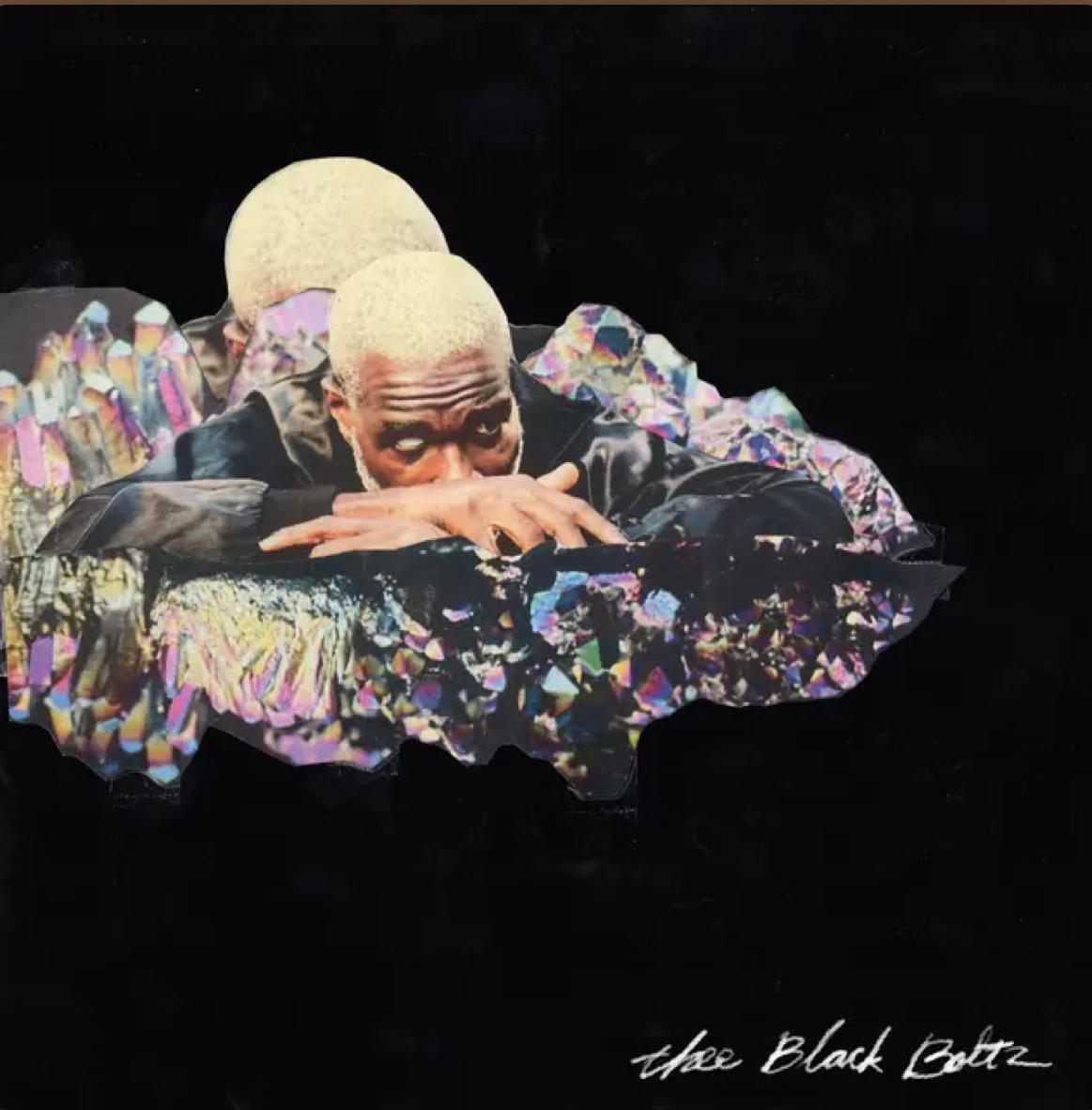
Adebimpe’s “Thee Black Boltz” is a vividly imagined solo debut that confirms his singular position in alternative music as the frontman of TV on the Radio. Adebimpe’s voice, both oracular and intimate, served as the anchor for the band’s genre-defying sound. Now, with solos that are equally theatrical, rhythmic, and vulnerable, he steps out alone. The album lacks protest anthems, instead opting for a politically charged, yet foreboding feel infused with resilience, danceable beats, slick synths, and sharp, insightful lyrics. It does not shout “I told you so” but poses the question of how to, perhaps, find light, even joy, in the ruins.
Master producer and Adebimpe’s longtime bandmate, Dave Sitek, is absent from this work. However, the production reins are in good hands with multi-instrumentalist Wilder Zoby, whose arrangements are crystalline in quality, providing clarity and space for Adebimpe’s vocals. Rather than bury meaning with murky layers, Zoby meticulously shapes tracks and juxtaposes a sonic storm through sleek chaos. Adebimpe’s vocals rise to the forefront alongside the clean, focused production. Instead of simply embodying the voice of a band, he becomes the emotional core. The album leans toward a weary hopefulness. On the title track, he croons, “Just when things got darkest / A thought said, say say,” signaling a kind of perseverance in the face of societal collapse. Even when steeped in despair, he searches for the bloom in the filth.
The most recent pop elements of the album blend towards the more experimental side of it. “Somebody New” features an electro beat similar to “The Weeknd” with dark glamour, and “The Most” timidly flirts with overly sentimentalism with the “I still love you, baby” line, but is quickly countered as a phrase drowned out in distorted synths and other sound effects that render the line ironic. On "ILY," gentle acoustic guitar by Mason Sacks creates a tender moment of vulnerability that parallels Adebimpe’s a cappella rendition in “Rachel Getting Married.” These moments of tenderness and quieter melodies, while somewhat few in number, add emotional depth and range to the record alongside stylistic variety and juxtaposition to the album’s abrasive textures.
“Thee Black Boltz” is at its best when cleverly crafted, reclaiming silliness within its absurdity. “Magnetic” combines slamming bass in a club, uniting club aesthetic with soaring vocals often heard at underground revival tents. Adebimpe’s playful side comes out on “Pinstack,” where sleek electro-funk blends with a cheerful wink to 2 Live Crew's “One and One.” Then there is "Blue," for me, the most haunting piece on the record. It is stripped down to little more than voice, mellotron, and an ominous feeling of location. It feels like a spiritual successor to TVOTR’s “Stork & Owl,” all tension and dread, painting a portrait of decay that’s more whispered than screamed.
The finale “Streetlight Nuevo” completes the circle of the album. Adebimpe sings over robotic percussion and Miguel Atwood-Ferguson's strings as he “Gimme that sound / I’m only tryin’ to see someone.” It depicts the tender essence of yearning towards a connection in the world we live in today that often feels like it’s falling apart. That is what “Thee Black Boltz” presents. Not a way and escape out of the chaos, but a way and invite dancing through it. Despair and self-pity are not what unhinge the power of the album and what serve as its force. In the sleek grooves, spiritual undertones, and candor, “Thee Black Boltz” shows that Adebimpe does not just endure a solo spotlight; he commands it.